

Pomona College, Pitzer College, and Claremont McKenna College signed Humane World for Animals’ Forward Food Pledge, advancing campus dining changes that will impact more than 4,000 students.


During the 2025-26 New Roots Institute Fellowship, Jaden Yang, a physics and politics major at Pomona College, set out to help their campus sign Humane World for Animals’ Forward Food Pledge by the end of the school year.
They reached that goal ahead of schedule, with Pomona signing in February. By June, Pitzer College and Claremont McKenna College also signed the pledge, showing how student advocates can help create long-term institutional change.
Jaden began by evaluating whether the Forward Food Pledge was the right fit for Pomona’s dining halls. Having worked with dining staff on previous initiatives, they understood the college’s dining system and the challenges of balancing sustainability goals with cost and student preferences.
Jaden organized a group of students through Pomona’s Sustainable Development Committee and created a survey to gather student feedback on plant-based dining options. They found that more than half of student respondents wanted more plant-based options, regardless of dietary preferences, and used concerns raised in the survey to strengthen their approach.
Armed with that feedback, Jaden and their fellow advocates met with Pomona’s head chef to present the Forward Food Pledge, why it matters, how it benefits the college, and ways to address concerns about cost and student pushback.
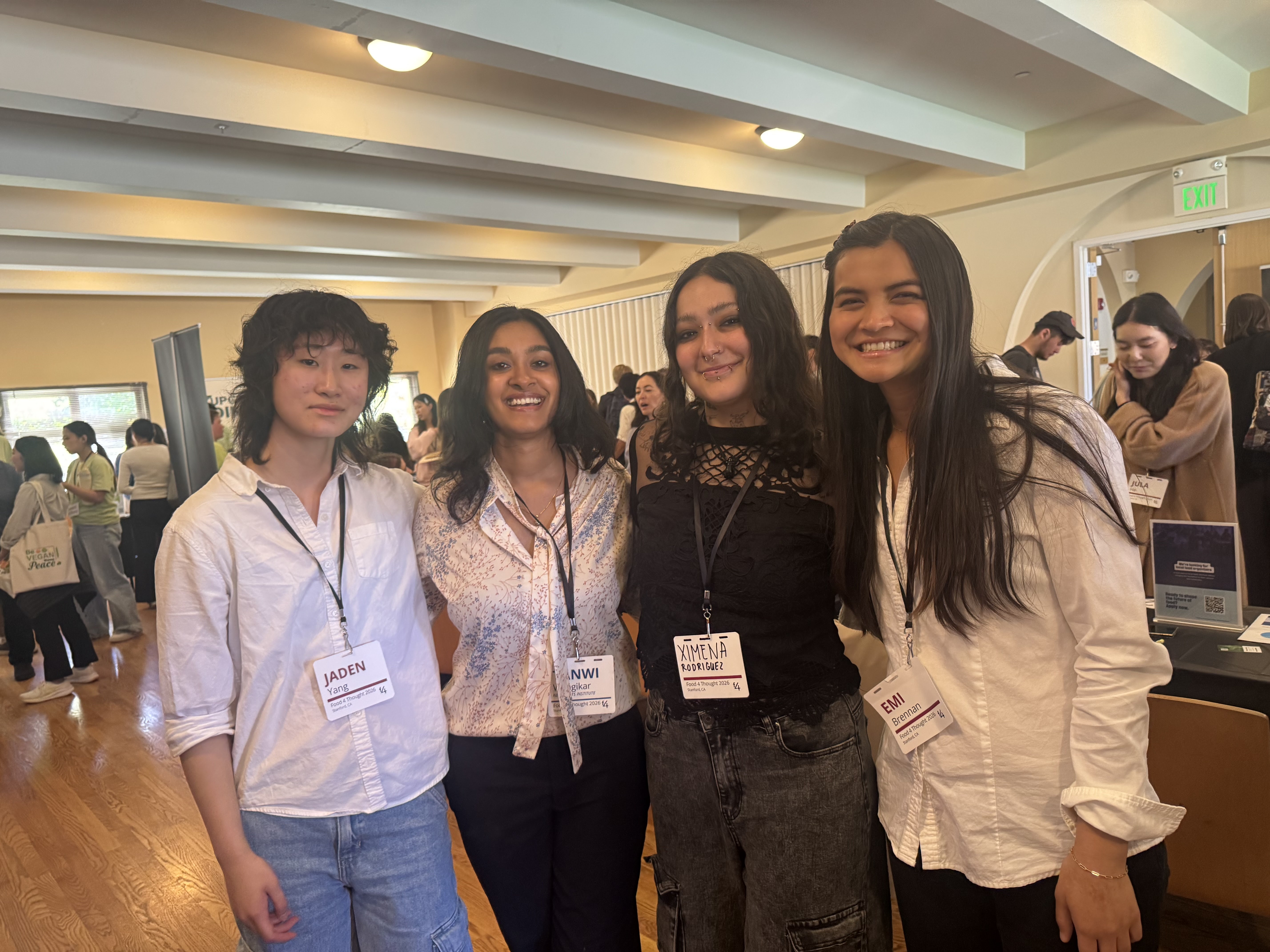
Through the New Roots Fellowship, Jaden had access to a peer community, staff support, and a Campaign Advisor from partner organization Humane World for Animals.
Jaden’s Campaign Advisor, Layla Gibson from Humane World for Animals, also played a critical role, especially when the campaign encountered a setback.
After Pomona’s head chef initially agreed verbally to sign the pledge, the signature did not come through. Jaden, fellow student advocates, and Layla scheduled another meeting to address the remaining concerns directly.
When resistance remained, they shifted their approach. Rather than insisting on an all-or-nothing outcome, they asked what percentage of plant-based offerings dining staff would realistically be willing to commit to. Jaden was prepared to accept a smaller initial commitment if it meant making progress.
The head chef agreed to review the numbers and later shared that he believed 50% plant-based offerings could be achievable by 2030.
On February 10, 2026, Pomona College officially signed the Forward Food Pledge.
"I credit this success to our preparation, having an expert, Layla, in the room, and being flexible with our asks," Jaden shared.
Pomona's commitment marked the first of three wins across the Claremont Colleges. With students, dining facilities, and advocacy networks connected across the consortium, organizers had opportunities to build on that progress at neighboring campuses.
After Pomona signed in February, Pitzer College followed in April 2026, committing to 50% plant-based offerings by 2031. By June, Claremont McKenna College had signed the Forward Food Pledge as well.
Collaboration with campus Sustainability Offices was an important part of securing these commitments. Across all colleges, student advocates worked with sustainability staff to bring the pledge proposal to dining leadership, with those partnerships playing an especially significant role at Pitzer and Claremont McKenna.
Together, the three commitments will impact more than 4,000 students across Pomona, Pitzer, and Claremont McKenna. Because students can dine across the Claremont Colleges consortium, students from Scripps College and Harvey Mudd College may also benefit from these dining changes.
As the three colleges work toward 50% plant-based dining, their commitments are projected to impact approximately 128,000 meals by the end of the 2031-32 school year.
“I hope that this win will draw more attention to the issues of animal agriculture and what students can do about it, starting on their campuses,” Jaden said.
School cafeterias and university dining halls serve hundreds to thousands of meals every day, shaping what students see as normal and convenient. When plant-based meals are a regular part of campus dining, students have more opportunities to choose options that are more sustainable and reduce reliance on factory farming.
Reflecting on how the pledge aligns with Pomona’s sustainability commitments, Jaden shared:
These commitments also extend beyond campus. Colleges purchase food in large quantities, and their purchasing decisions can signal growing demand for plant-based options to producers and distributors.
Jaden’s campaign is part of a longer arc of campus advocacy at the Claremont Colleges, built by New Roots fellows and alumni over multiple years.
New Roots alum Hannah Shae founded the 5C Plant-Based Mission Club during her time at Pomona. Jaden joined the club, built on that work, and eventually became a co-leader alongside fellow New Roots alum Kate Evans.
During Earth Week 2025, Jaden and Hannah co-organized a VegFest at Pomona’s Frank Dining Hall. Student advocates from Pomona, Scripps, and Pitzer worked with dining staff to plan an entirely vegan dinner menu, bringing students together while strengthening relationships that would support future advocacy, like the Forward Food Pledge campaign.

Leah Gorence, a New Roots fellow at Scripps College who is working with Humane World for Animals on a parallel Forward Food Pledge campaign, has been a close collaborator throughout. “I consider Jaden to be my strongest ally, and we have worked together considerably. We have met to discuss strategy, and we meet in person to hold ourselves accountable to our New Roots work,” Leah shared.
Jaden’s campaign is also part of a growing track record of New Roots fellows moving campus dining systems. In 2024, New Roots alum Parker Do and Joseph Serafino worked with Humane World for Animals, formerly known as the Humane Society of the United States, to help secure UCLA’s commitment to a 50% plant-based menu in its dining halls by 2027.
Strong networks and succession plans allow new advocates to step in, build on existing relationships, carry forward institutional knowledge, and continue campaigns that may take years to complete.
Although Pomona, Pitzer, and Claremont McKenna have signed the Forward Food Pledge, the work is ongoing.
Humane World for Animals and student advocates in the 5C Plant-Based Mission Club will continue to track progress, support dining staff, conduct menu audits, and work with campus partners to ensure the commitments result in meaningful changes.
At Scripps, student advocates are working with the college’s sustainability team, which is currently reviewing the Forward Food Pledge proposal. They are also exploring opportunities to bring the pledge to Harvey Mudd, the consortium’s other remaining undergraduate college.
Beyond dining, Jaden has been active in climate and policy advocacy, including supporting the Claremont Colleges’ transition to 100% renewable energy, securing student resolutions to phase out industrial gas boilers, and lobbying in Washington, D.C. for environmental policy.
This school year, Jaden is working on state electricity pricing policy and a solar panel installation at Pomona’s farm. They are competing in the Energy District Cup competition through the National Lab of the Rockies and conducting research at Pomona on organic field-effect transistors for flexible solar cells. They also volunteer at an animal sanctuary and plan to attend COP31 in Antalya, Turkey, in November 2026.
After several years of campus advocacy, Jaden has learned that successful campaigns require persistence, preparation, and an understanding of the people making decisions.
“Harness student body support, as it helps to have numbers and college staff/administrators care what students think,” they said. “Come prepared to respond to different answers, and stick with it even if the answer is ‘no’ at first.”
They emphasize the importance of approaching decision-makers with curiosity and respect.
“It helps to assume good intentions and to approach with understanding rather than judgment. Make the decision and process as easy as possible for decision makers so that they have no reason not to say yes.”
At the same time, Jaden encourages advocates to remain flexible.
“Do not tie yourself down to a specific outcome or an all-or-nothing approach,” they said. “Sometimes dining concerns may be valid rebuttals to your campaign, and be willing to compromise or pivot to different ideas or strategies. Most importantly, know your audience and speak to their values. Tying your campaign to what they care about will be what motivates them.”
What began as a campaign at one college has grown into commitments across three colleges, with more work underway throughout the consortium. Jaden’s experience demonstrates how students can collaborate with institutional decision-makers, movement partners, and fellow advocates to create changes that last beyond their time on campus.
Inspired by Jaden's story? The New Roots Fellowship gives students the training, mentorship, and community to lead advocacy campaigns like this one. Learn more and apply →
New Roots Institute is a nonprofit empowering the next generation with knowledge and training to end factory farming. Through our leadership development programs, fellows take what they learn about the food system and put it into practice by launching campaigns that challenge industrial animal agriculture. We are strengthening the movement—spreading change from individuals to their communities, and expanding outward into wider systems-level change.