
.jpg)


Wildfires are becoming harder to ignore.
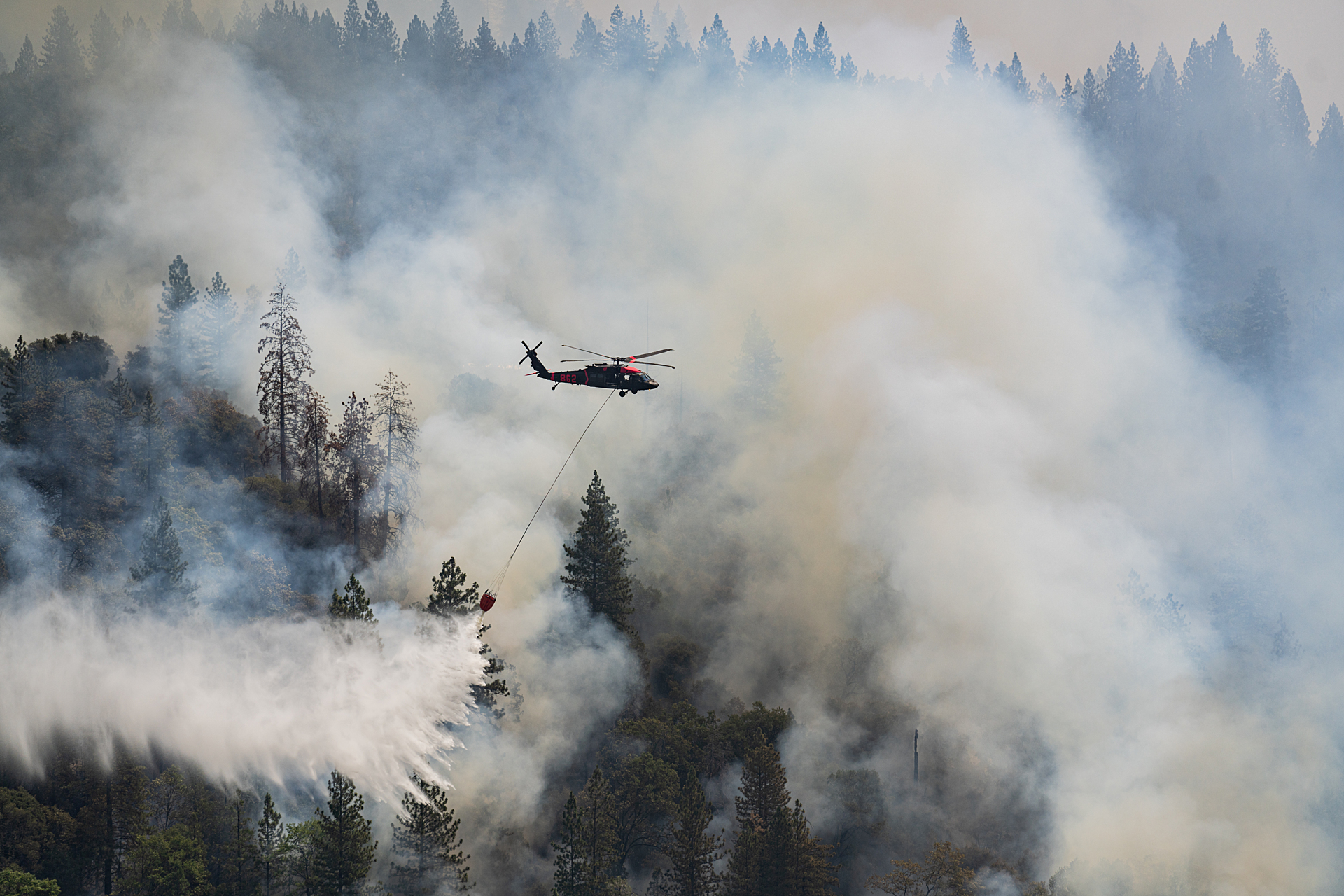
In Canada, 2023 and 2025 ranked as the worst and second-worst wildfire seasons in recorded history, burning a combined total of more than 26 million hectares and forcing hundreds of thousands of people to evacuate.
Across the western United States, Mexico, Brazil, and East Africa, 35 years of weather data show that fire seasons are starting earlier, lasting longer, and burning more land.

Most wildfires are ignited by human activity, including debris burning, discarded cigarettes, fireworks, and arson, or by natural causes such as lightning.
But ignition is only part of the story.
Climate change creates the hotter, drier conditions that allow a spark to grow into a faster-moving, more destructive blaze.
One contributor to that warming rarely enters the conversation: factory farming.
Industrial animal agriculture contributes to the climate conditions that intensify wildfires, reshapes landscapes in ways that make them more vulnerable to burning, and confines billions of animals in facilities where escape is often impossible when fire breaks out.
The connection runs through two major pathways: greenhouse gas emissions that accelerate climate change, and the large-scale deforestation that dries out landscapes and removes the natural buffers that slow fires.

Global food production is responsible for approximately 35% of all greenhouse gas emissions, with animal agriculture alone accounting for an estimated 12 to 20% of the global total.
The primary contributors include methane and nitrous oxide.
Grazing animals, particularly cows, produce methane through enteric fermentation, the digestive process that allows them to break down plant material. Methane is also released from manure management systems such as liquid manure lagoons and pits, which also generate nitrous oxide.
These gases are not minor contributors: over 100 years, methane is 28 times more potent than carbon dioxide at trapping heat, while nitrous oxide is approximately 300 times more potent.
Animal agriculture also produces emissions through fertilizer production, feed crop cultivation, fuel use, land clearing, transportation, processing, and energy use throughout the supply chain. Together, these activities contribute to rising global temperatures and the conditions that make severe wildfires more likely.

Warmer temperatures dry out vegetation. In some regions, summer rainfall decreases. Hotter nighttime temperatures can prevent fires from weakening after sunset, allowing them to continue burning and spreading.
Despite the scale of factory farming’s climate footprint, only around 7% of climate media coverage mentions animal agriculture, leaving many people without a clear understanding of how food production contributes to a warming planet.
Beyond emissions, animal agriculture shapes the physical landscape in ways that increase wildfire risk.
Globally, livestock farming and the production of feed crops like corn and soy are major drivers of deforestation.
In Canada, approximately 42% of deforestation between 1990 and 2015 was driven by agricultural expansion, including livestock grazing and crop production. In Brazil’s Amazon, pasture expansion for cows has been linked to 80% of deforestation.
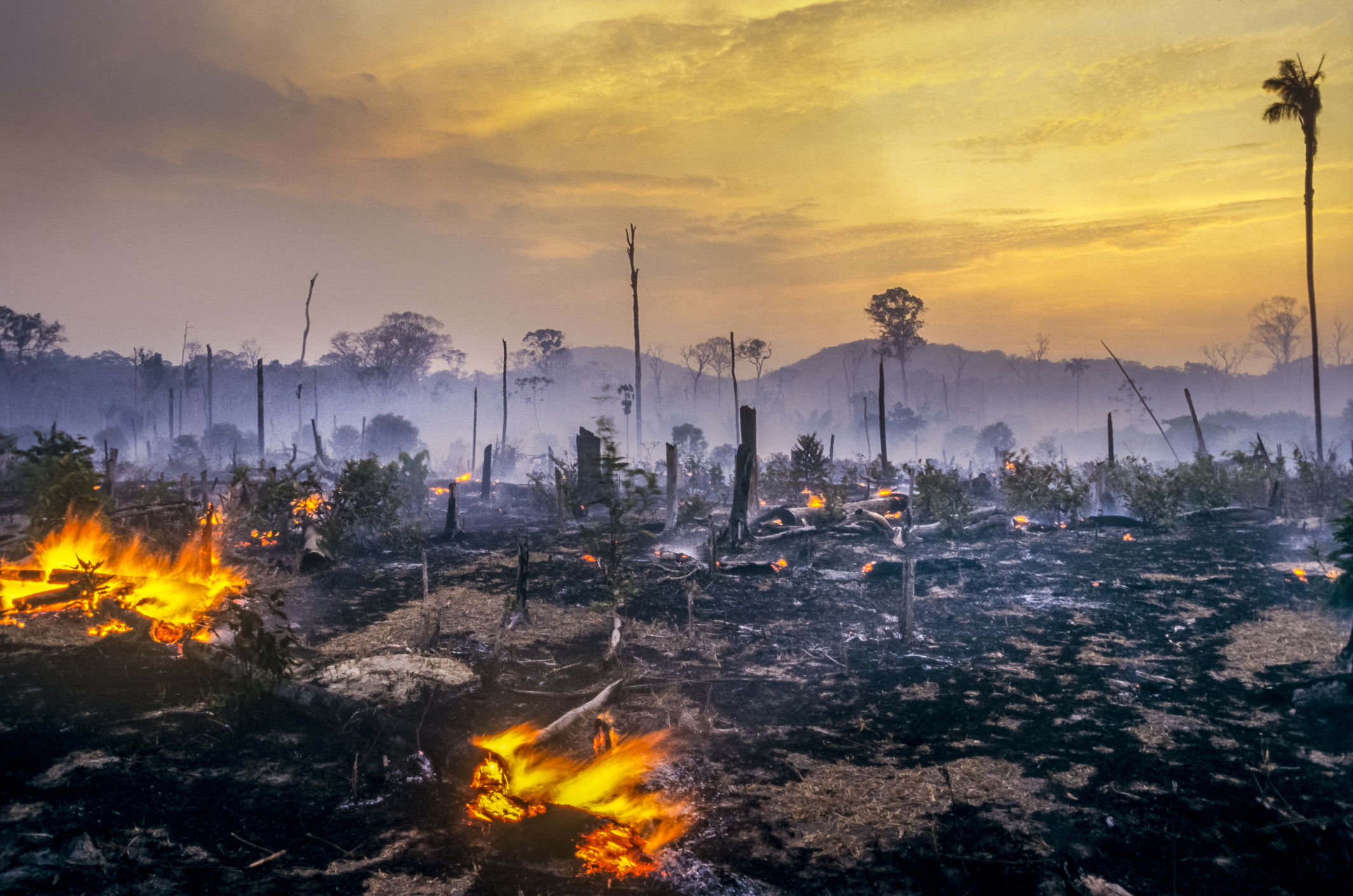
Forests absorb carbon, retain moisture, and regulate local climate conditions. When they are cleared, land becomes drier, hotter, and more prone to fire.
This creates a destructive feedback loop:
There is a second way that factory farming and fire intersect: the farms themselves.
Industrial animal agriculture confines billions of animals in densely populated barns and facilities. When fires begin inside these buildings, animals often have little or no ability to escape.
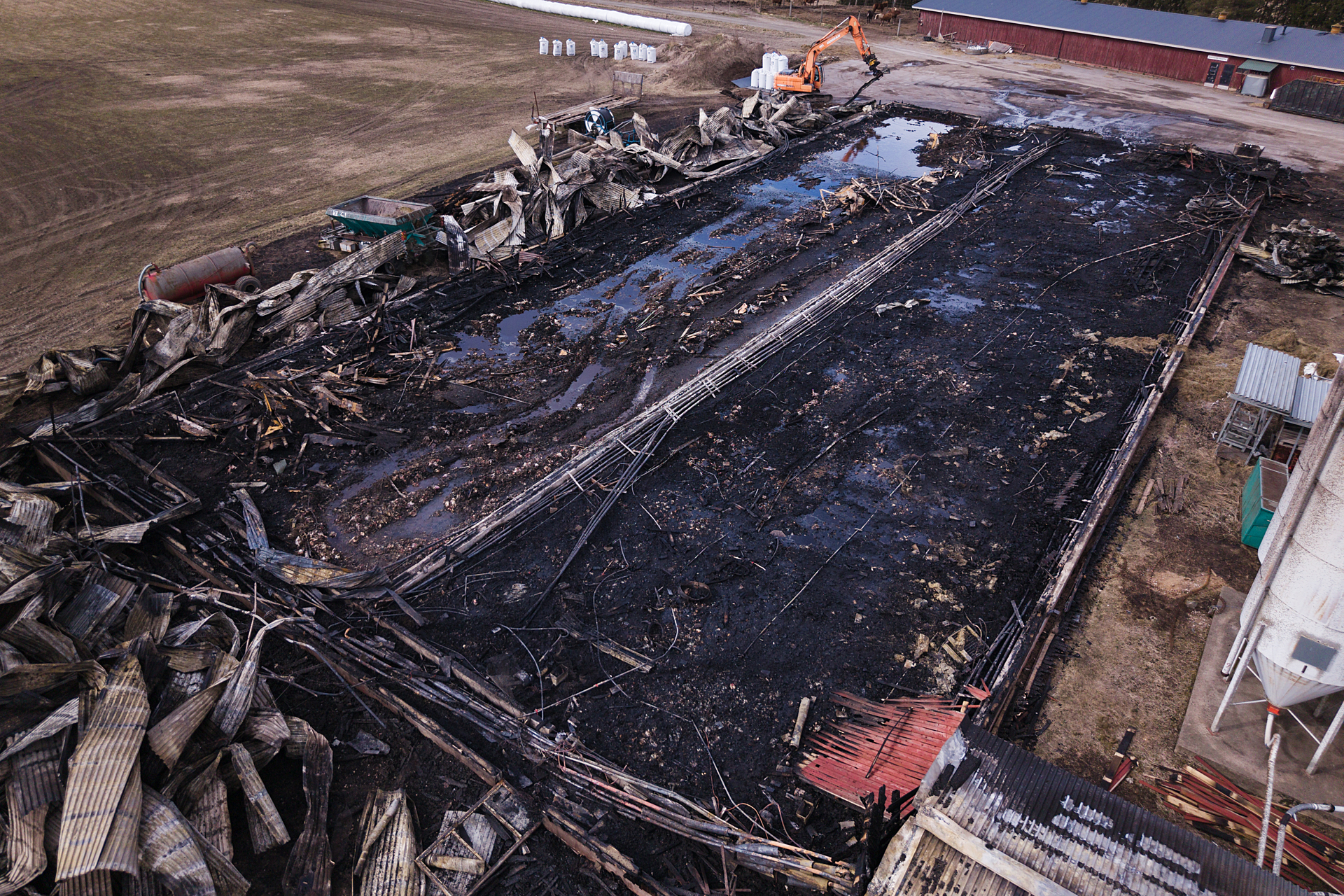
The structural design of many facilities, limited fire-prevention requirements, and the large number of animals housed in a single location can turn one incident into a mass-casualty event.
There are no comprehensive federal reporting requirements for farm-animal deaths caused by fires in the United States. Farmers and fire departments are generally not required to document those deaths, and reporting barn fires to the U.S. Fire Administration is voluntary.
Because reporting is inconsistent, the exact number of animals killed is unknown.
Conservative estimates primarily based on media reports suggest that at least 8.35 million farm animals have died in barn fires in the U.S. since 2013. Between 2022 and 2024 alone, 2.53 million farm animals were killed across 17 different species.
Individual incidents reveal how quickly the death toll can rise.
A fire at a Texas dairy operation killed approximately 18,000 cows in 2023. In 2024, a fire at an egg facility in Illinois killed more than one million chickens in a single day.
In Canada, at least 740,000 farm animals died in barn fires between 2015 and 2019. Researchers describe that figure as a conservative estimate because many incidents, particularly on smaller farms, are never publicly reported.
As recently as July 2026, an estimated 20,000 pigs died in a barn fire in Ontario.
Industrial farm buildings are generally designed for production efficiency, not animal safety. Several structural, operational, and regulatory factors can make fires especially destructive.
Electrical hazards: In Ontario, 40% of barn fires are linked to electrical problems. Humidity, dust, debris, and gases from animal waste can accumulate inside enclosed buildings and damage wiring and equipment over time. Malfunctioning, defective, or improperly placed heating devices are among the most common ignition sources.
Building design: Many farm buildings are situated close together and constructed from or filled with flammable materials like wood, dry feed, insulation, and bedding. Once a fire begins, these materials can allow flames to spread rapidly within a structure or between nearby buildings.
Limited fire-suppression systems: Neither Canada nor the United States currently mandates water sprinklers in farm buildings at the federal level. In the United States, the National Fire Protection Association's NFPA 150 standard provides guidance for fire safety in animal housing facilities, but it is voluntary and has not been widely adopted by states. Recent updates to the standard require automatic fire sprinklers at commercial animal agriculture facilities above a certain size threshold.
Low legal occupancy standards: Most buildings in Canada and the United States must meet strict fire safety codes. Farm buildings, typically classified as structures with low human occupancy, are largely exempt from these requirements, despite routinely housing tens of thousands of animals.
Limited evacuation planning: AZA-accredited zoos and aquariums are required to have detection systems, alarms, extinguishers, trained staff, and annual emergency drills. Factory farms face almost no comparable requirements. Farmed animals are also excluded from the protections of the federal Animal Welfare Act, leaving them with fewer legal safeguards than many other animals kept in managed facilities.
Remote locations: Factory farms are frequently located in rural areas, far from fire hydrants, fire stations, and emergency responders. When a fire starts, response times can be long and water access limited.
Farmed animals face a compounding risk.
The facilities in which they are confined may themselves be fire hazards. At the same time, worsening wildfires can disrupt power, transportation, staffing, ventilation systems, feed delivery, and access to water.
Even without direct contact with flames, animals may experience:
Evacuating farm animals during a wildfire is rarely straightforward.
Many animals are not accustomed to trailers or human handling. Under stress, they may freeze, resist movement, become aggressive, or attempt to return to familiar buildings, even when those structures are burning.
If evacuation is attempted, moving hundreds or thousands of frightened animals can take hours or days. Volunteers and emergency responders may be required to work in active fire zones with limited visibility and significant personal risk.
For animals housed by the tens of thousands in a single facility, meaningful evacuation may be practically impossible.
Industrial animal agriculture contributes to the warming climate that creates the conditions for catastrophic wildfires.
It drives deforestation that dries out landscapes, removes natural fire buffers, and reduces the amount of carbon forests can absorb.
At the same time, it confines billions of animals in structures that, by design and by law, offer almost no protection when fire breaks out.
Better fire prevention standards for farm buildings, such as mandatory sprinklers, detection systems, annual inspections, and emergency protocols, are attainable and necessary steps. But they address only one symptom of a much larger system.
Understanding the role factory farming plays in the wildfire crisis helps reveal how deeply our food system is connected to some of today’s most urgent environmental challenges, and why lasting solutions require looking beyond the fire itself.
New Roots Institute is a nonprofit empowering the next generation with knowledge and training to end factory farming. Through our leadership development programs, fellows take what they learn about the food system and put it into practice by launching campaigns that challenge industrial animal agriculture. We are strengthening the movement—spreading change from individuals to their communities, and expanding outward into wider systems-level change.


.jpg)