




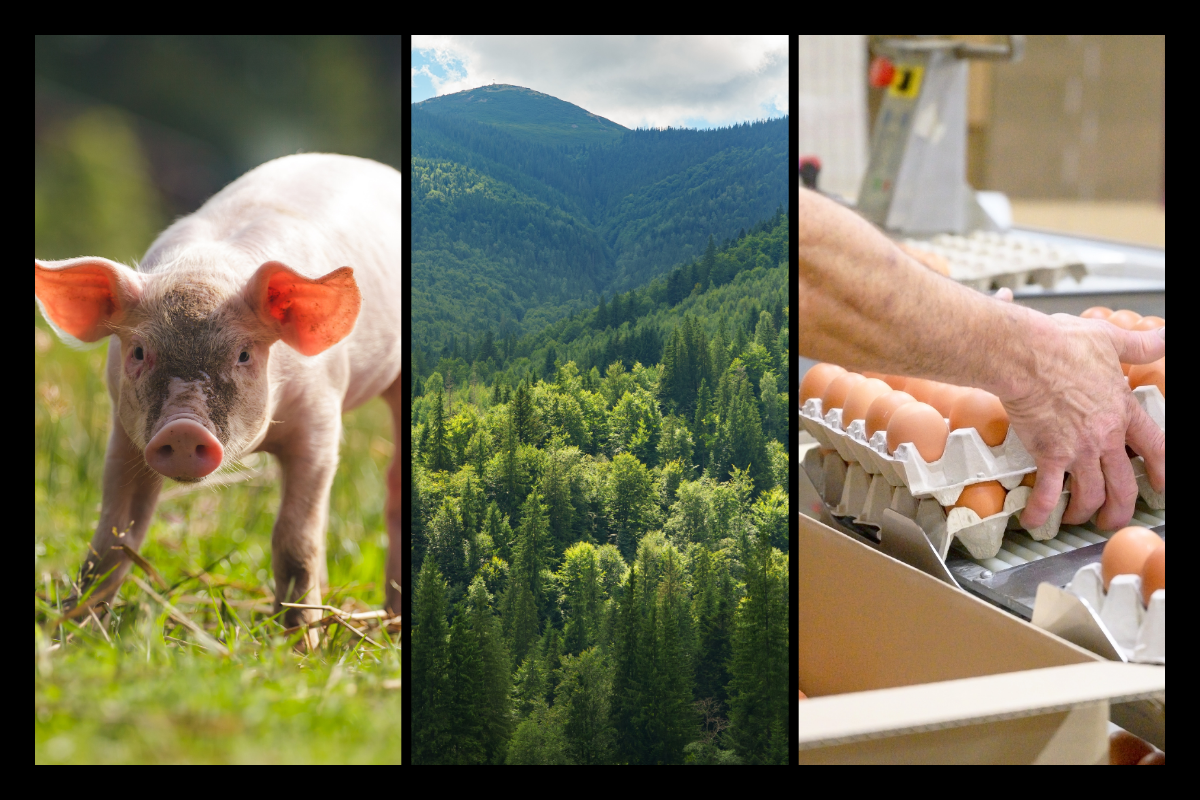
Factory farming affects more than food production. Discover its hidden impacts on climate, animals, public health, and communities.


The industrial agriculture system is often discussed in terms of efficiency and how it produces large amounts of meat, dairy, and eggs at a relatively low cost.
But that efficiency comes with tradeoffs.
Factory farming’s consequences span environmental destruction, animal suffering, human health risks, and social injustice. Each of these areas is interconnected, and together, they paint a picture of a system that shifts costs onto the world around it.
One of the most compelling reasons to address factory farming is its large environmental footprint. Industrial animal agriculture impacts nearly every dimension of the planet’s ecological health, from the atmosphere above to the waterways below.
Animal agriculture is responsible for an estimated 12-20% of global greenhouse emissions. Estimates vary, but the range reflects consistent scientific agreement that livestock is a major driver.
These emissions come from multiple sources: methane from cattle digestion, nitrous oxide from manure management, and carbon dioxide from land clearing and feed crop production.
Despite this, only 7% of climate media coverage addresses animal agriculture, illustrating just how hidden this system is not just to the everyday person, but even to those deeply embedded in climate work.
Agriculture accounts for 69% of annual freshwater withdrawals globally, and up to 80% in the U.S. The water demands of factory farming are enormous, both directly for animals and indirectly to grow their feed. A single pound of beef requires an estimated 1,800 gallons of water to produce from start to finish.
This strain is contributing to a rapidly escalating global crisis. In a 2026 United Nations report, researchers warned that the world is no longer just facing a water crisis—it has entered a state of “global water bankruptcy,” where demand is outpacing the planet’s ability to replenish resources.
As the number of factory farmed animals increases, so does their waste. As of 2022, manure from factory farms results in about 1 trillion pounds of waste each year, leading to significant water pollution. In fact, intensive livestock production is the largest sector-specific driver of water pollution. Manure lagoons (open pits to store waste from thousands of animals) can leak or overflow, releasing nitrogen, phosphorus, and pathogens into nearby streams and groundwater.

Fertilizer and pesticides sprayed on feed crops like corn and soy further compound this pollution.
Factory farming is also a major contributor to air pollution, releasing gases such as ammonia and hydrogen sulfide into the environment.
Agriculture is responsible for approximately 81% of global ammonia emissions, with the primary sources being livestock production, manure handling and storage, and animal housing.
Because ammonia contributes to the formation of fine particulate matter in the air, these emissions can travel beyond farm boundaries, affecting regional air quality and public health.
Livestock and the crops grown to feed them now occupy approximately 80% of global agricultural land use, yet produce only about 17% of the world’s calories.
Vast tracts of forest, including portions of the Amazon rainforest, have been cleared to grow feed crops or create cattle pasture. In the Amazon alone, cattle ranching is responsible for approximately 80% of forest loss. Of all commodity-driven deforestation, these pastures contribute 42% of deforestation.
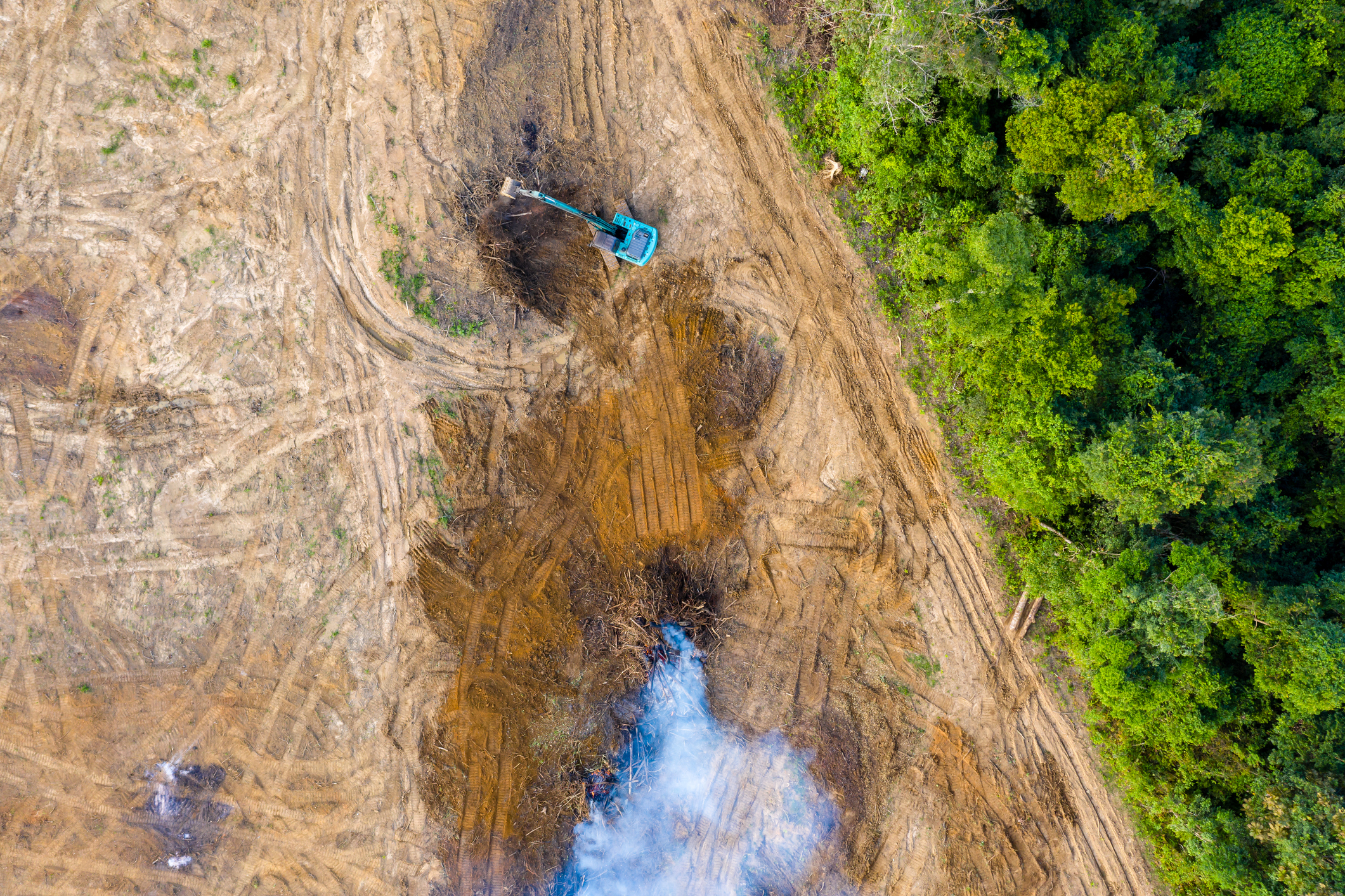
This deforestation destroys biodiversity, releases stored carbon, and disrupts regional water cycles, creating feedback loops that accelerate climate change.
Grasslands and wetlands are also disappearing at 4x the rate of forests, with ⅔ of the destruction linked to factory farms.
Understanding the conditions animals experience in factory farms requires moving past the numbers. Behind every statistic is a living creature with a nervous system capable of experiences such as pain, stress, fear, discomfort, contentment, and joy. This is also known as animal sentience, which is now well-established in scientific literature.
Most animals in factory farms are slaughtered when they are still very young, living a small fraction of their natural lifespan in intense, confined conditions.
The specifics vary by species, but common conditions across factory farms include severe space restriction, lack of access to natural light or outdoor environments, inability to express their natural behaviors, and chronic stress from overcrowding.
🐓 Broiler chickens
Broiler chickens, the most numerous factory farmed land animals, are typically raised by the tens of thousands in large windowless sheds, often with less than one square foot of space per bird. Modern breeds have been selectively bred to be 400% larger than chickens in 1957, resulting in birds that reach slaughter weight at just 6 weeks old. Their growth is so expedited that their bodies often can’t keep up, leading to chronic pain, heart failure, and difficulty walking.
🐖 Pigs
Piglets are separated from their mothers within days of birth and sent to indoor nursery facilities before being moved to fattening farms. Breeding sows are frequently confined in gestation crates barely larger than their own bodies, preventing them from turning around. In the United States, about 330,000 pigs die during travel or soon after every year.
🐄 Dairy cows
Dairy cows are kept in near-continuous lactation through repeated pregnancies. Calves are typically separated from their mothers within hours of birth so their milk can be sold for human consumption. Female calves re-enter the dairy cycle; males are slaughtered for veal between 16-18 weeks old, or for cheap beef at 2-4 years old. Dairy cows themselves are typically slaughtered for hamburger meat or dog food after just 4-6 years, a fraction of their 15 to 20-year natural lifespan.
🐟 Fish
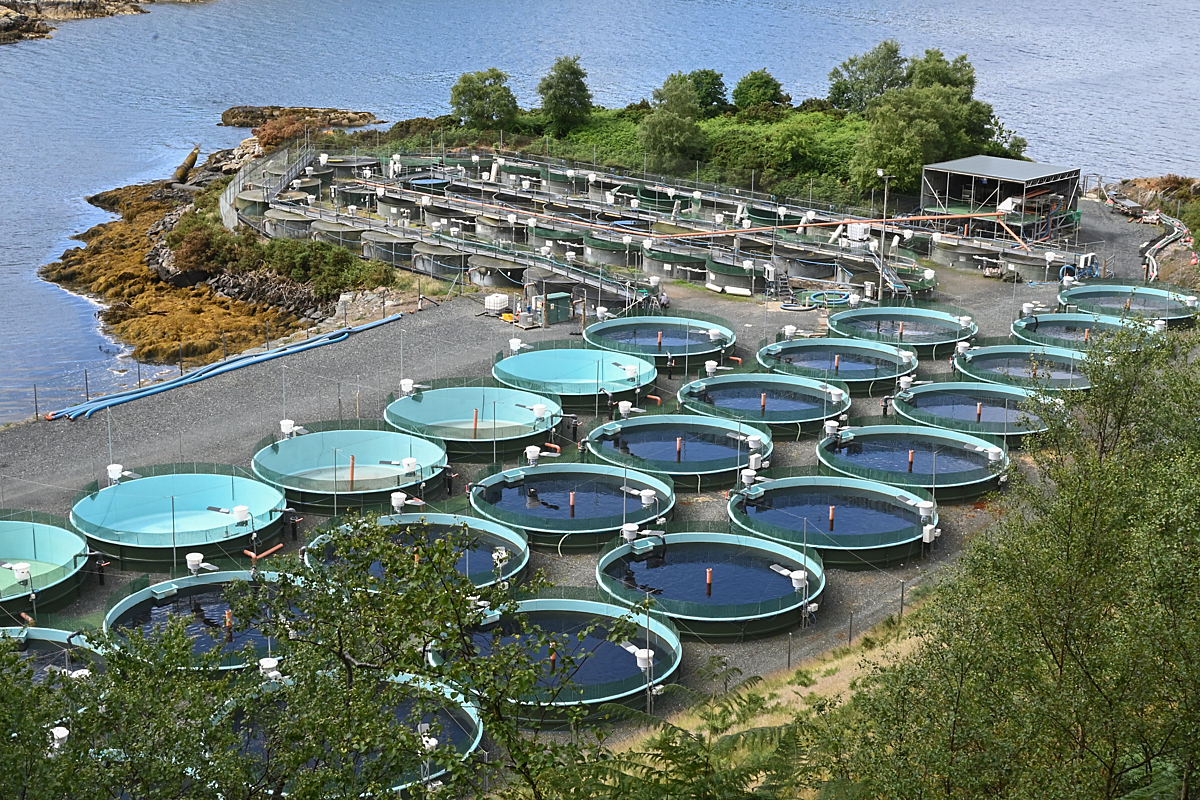
Fish farms, or aquaculture, now account for half of the world’s fish supply. Factory fish farms are typically overcrowded, resulting in reduced water quality, elevated stress, and rapid spread of parasites and diseases. Fish welfare has historically received less regulatory attention than land animals, despite growing scientific evidence of their capacity to feel pain.
It’s important to note that turkeys, sheep, rabbits, geese, and many other species are also raised in intensive factory farm conditions, not just the above examples.
To manage the behavioral problems that arise from intensive confinement, factory farms routinely perform procedures including beak trimming in poultry (to prevent stress-induced pecking in crowded conditions), tail docking in pigs, and de-horning cattle, typically without anesthetic.
These practices are not universally condemned, and industry groups argue they are necessary welfare interventions in high-density environments. Animal advocates counter that addressing the root cause, confinement itself, would make these procedures unnecessary.
A widely recognized benchmark for animal welfare, developed in the U.K. following the Brambell Report of 1965, identifies five core freedoms that animals should have:
Critics of industrial animal agriculture argue that standard factory farming practices fall short on multiple counts, particularly regarding freedom of movement and behavioral expression.
It’s also worth noting that the Five Freedoms framework is considered a minimum standard and doesn’t account for what it means to give animals genuinely positive experiences, or a life worth living.
Many labels on animal product packaging can be misleading, a phenomenon sometimes called “humanewashing.” Label descriptions and requirements can vary by state and country, and the below table reflects typical U.S. standards.
Factory farming is not only an environmental and animal welfare issue. It has direct implications for human health, both at the individual level and as a matter of public health policy.
Stress from factory farm conditions suppresses animals’ natural immunity, while the scale and density of these operations create ideal conditions for disease to spread and evolve.
Perhaps the most significant long-term human health risk is the role factory farming plays in driving antimicrobial resistance (AMR). Approximately 80% of antibiotics sold in the United States are administered to livestock. Not only to treat disease, but to promote growth and prevent infections that would otherwise spread rapidly in crowded conditions.
This widespread, low-dose use creates ideal conditions for bacteria to develop resistance. The World Health Organization has identified AMR as one of the top 10 global public health threats to humanity, with factory farming practices recognized as a contributing factor.

The consolidation of the food system into fewer, larger facilities amplifies the scale of contamination events. A single processing plant handling millions of pounds of product means a bacterial outbreak, like E. coli, Listeria, and Salmonella, can reach consumers across dozens of states before it is detected. The CDC estimates that 48 million Americans experience foodborne illness each year, resulting in 128,000 hospitalizations and 3,000 deaths. Meat (beef, game, pork, and poultry) is the highest contributor to foodborne illness deaths, with the majority caused by Listeria and Salmonella infections.
The top 10 leading causes of death in the United States include heart disease, cancer, stroke, and diabetes. A growing body of research links high consumption of red and processed meat, the primary output of the factory farming system, to elevated risk across all four of these conditions.
A 2024 analysis estimated that if adults in the U.S. reduced their consumption of red and processed meat by 30%, it could lead to over 1 million fewer cases of type 2 diabetes, almost 400,000 cases of cardiovascular disease, over 84,000 cases of colorectal cancer, and over 62,000 deaths over a 10-year period.
Any account of factory farming’s impact must include the people who work inside these facilities and the communities that live alongside them. These are often the least-discussed consequences, and disproportionately affect people with the least political and economic power.
Meatpacking and poultry processing are among the most dangerous occupations in the United States. Workers perform repetitive tasks at high speed, often standing for hours in cold, wet conditions, while exposed to feces, blood, and disease.

Injury rates in the industry are significantly above the national average for manufacturing, with musculoskeletal injuries, lacerations, and amputations among the most common. A 2025 USDA report found that 81% of poultry workers are at high risk for musculoskeletal disorders, with an average annual labor turnover rate of 86%.
A 2020 investigation by the House Select Subcommittee on the Coronavirus Crisis found that meatpacking companies continued to operate at full capacity during COVID-19 outbreaks, leading to at least 59,000 workers experiencing illness and 269 workers dying.
The psychological toll is also severe: research documents elevated rates of PTSD, depression, alcoholism, drug use, and domestic violence among slaughterhouse workers, stemming from the traumatic nature of the work.
The workforce in these plants is disproportionately made up of immigrants, refugees, and people of color; communities that have historically had limited access to legal protections or recourse when working conditions are unsafe.
In fact, according to the Center for Economic Policy and Research, nearly 50% of meatpacking workers are Hispanic and 25% are Black, and nearly half live in low-income families and disproportionately lack health insurance.
Research on communities located near large CAFOs documents elevated rates of respiratory illnesses and impacts on mental health, social health, and economic health.
Exposure to hydrogen sulfide and ammonia from manure further affects physical health, with animal-based foods contributing 80% of the 15,900 annual deaths from food-related fine particulate matter pollution.
Groundwater contamination from lagoon leakage affects drinking water quality in rural communities across states like Illinois, North Carolina, and Missouri, areas with high concentrations of industrial hog and poultry operations.
These burdens are not distributed equally. Studies have found that CAFOs are significantly more likely to be sited near communities of color and lower-income rural areas, placing the issue within the broader context of environmental justice.
Regulation of factory farms in the U.S. is fragmented and, critics argue, inadequate. The Clean Air Act, Clean Water Act, and various state-level regulations all touch on CAFO operations, but enforcement is inconsistent and exemptions are common. According to EPA data, fewer than 6,300 of the more than 21,000 large CAFOs hold the water pollution discharge permits required under the Clean Water Act.
Additionally, agricultural lobbying has historically been effective at shaping policy in ways that limit regulatory oversight, and many states have passed “ag gag” laws restricting undercover investigations of farming facilities.
Factory farming is not defined by a single issue, it is a system with wide-reaching consequences.
Environmental degradation, animal welfare concerns, public health risks, and social inequities are not separate problems, they are interconnected outcomes of how the system is designed.
Understanding these impacts is a first step. To see the full picture, we also have to ask how we got here and what it will take to move forward.
New Roots Institute is a nonprofit empowering the next generation with knowledge and training to end factory farming. Through our leadership development programs, fellows take what they learn about the food system and put it into practice by launching campaigns that challenge industrial animal agriculture. We are strengthening the movement—spreading change from individuals to their communities, and expanding outward into wider systems-level change.


.jpg)

.jpg)
.png)